The Reel Nineties: 1990s Film History
Between the bubble's burst and the broadband age, Japan fell in love with the movies all over again. The Reel Nineties revisits the films, theaters, and rituals of the 1990s — the last great decade of going to the pictures.
Why the Nineties Mattered
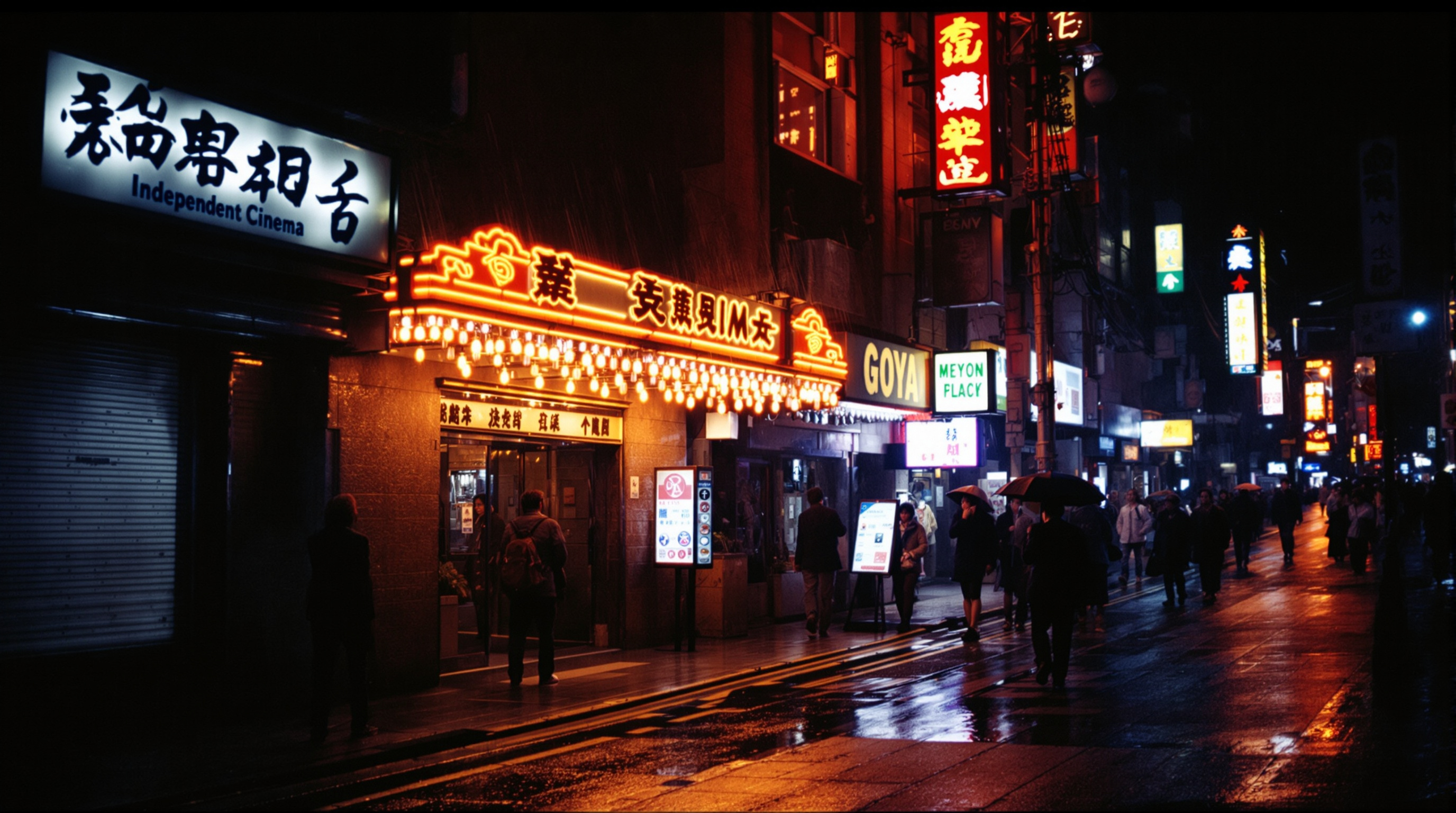
Ask any film lover who came of age in 1990s Japan and they will describe the same scene: a queue snaking down a side street in Shibuya or Ginza, a glossy chirashi flyer folded into a coat pocket, and a single screen showing something strange and wonderful from Scotland, Minnesota, Tehran, or Tuscany. The decade was a golden age for imported cinema. Independent American film was exploding, European auteurs were resurgent, and Iranian and Asian filmmakers were winning the world's festivals. Japanese distributors raced to bring all of it home, and audiences rewarded them with sold-out runs that sometimes lasted months.
The essays cover the films themselves and the culture of watching them. It follows the introductions, story notes, cast biographies, trailer campaigns and theatrical rituals that defined the decade.
What You Will Find Here
The essays are organized into two strands. The first is a set of retrospective film essays, each one revisiting a single picture that played Japanese screens during the long nineties — from Trainspotting's youth-culture shockwave to the quiet word-of-mouth triumph of The Shawshank Redemption, from the snowbound irony of Fargo to the barefoot tenderness of Children of Heaven. These are not reviews. They are histories: how each film arrived, how it was sold, and why it stuck.
The second strand explores the ecosystem that made those releases possible. Our essay on the foreign-film boom traces how distribution worked when prints still traveled in cans. A companion piece celebrates the mini-theater movement — the intimate, single-screen rooms that turned movie-going into a subculture. And because the decade ended at home as much as in theaters, we chart the VHS-to-DVD transition that put world cinema on every rental shelf in the country.
Featured Essays
- Trainspotting (1996) — How a £1.5 million Scottish film about heroin became a Tokyo fashion statement.
- Fargo (1996) — The Coen brothers' snow-globe noir and the prestige-badge marketing that sold it.
- The Big Lebowski (1998) — A box-office shrug that became one of the most quoted films on earth.
- The Shawshank Redemption (1994) — The slow-burn classic that Japanese audiences embraced early and never let go.
- Life Is Beautiful (1997) — Roberto Benigni's fable and the tears it earned across two hemispheres.
- Children of Heaven (1997) — The Iranian masterpiece that made a pair of sneakers unforgettable.
The full list of essays lives on the Films page, and new pieces are added as the collection grows.
A Word About This Project
The Reel Nineties is an independent, non-commercial film-history project. We are not a studio, a distributor, or a streaming service, and we are not affiliated with any company past or present. Everything here is original writing, produced for readers who love cinema history. Institutional resources such as the National Film Archive of Japan preserve the physical record of this era — prints, posters, and papers — and we encourage readers to support that work. Our corner is smaller: the memory of what it was like to sit down in the dark, in 1996, and watch the curtain open. You can read more on our About page.