Children of Heaven (1997): One Pair of Shoes
Majid Majidi's tale of a brother, a sister, and a single pair of sneakers became the film that introduced an entire Japanese generation to Iranian cinema.
The Film
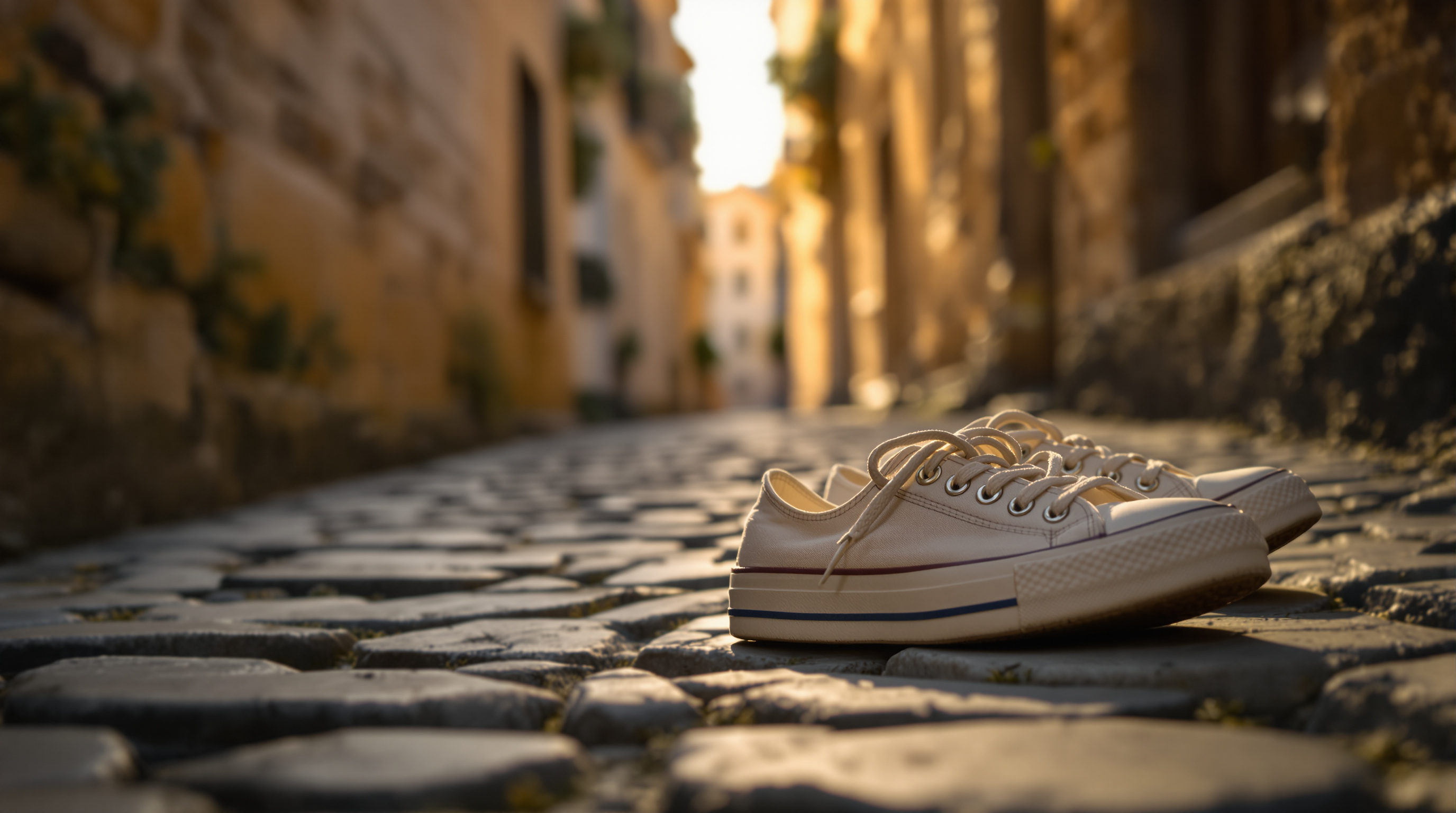
Nine-year-old Ali loses his little sister Zahra's just-repaired shoes on an errand through the alleys of south Tehran. Too poor to tell their parents and too loyal to betray each other, the siblings improvise a secret relay: Zahra wears Ali's sneakers to her morning classes, then sprints home to hand them off for his afternoon school shift. The plot's climax is a children's footrace in which Ali, agonizingly, must try to finish not first but third — because third prize is a pair of sneakers. From this almost absurdly small premise, Majidi builds a film of enormous moral scale: about dignity inside poverty, the fierce private honor of children, and an economy of care in which a pair of shoes is a fortune.
The film swept audience awards at the Montreal World Film Festival in 1997 and, in 1999, became the first Iranian film ever nominated for the Academy Award for Best Foreign Language Film — a milestone for a national cinema that had spent the decade conquering the world's festivals while remaining nearly invisible in commercial theaters abroad.
Iranian Cinema's Japanese Decade
Japan was, by the late 1990s, one of the most receptive markets on earth for Iranian film. The masters of the Iranian new wave had been festival fixtures in Japan for years, championed by critics and programmed devotedly by the art-house circuit chronicled in our mini-theater essay. Iranian cinema's child protagonists, unhurried rhythms, and ethical clarity struck Japanese critics as kindred — comparisons to the country's own golden-age humanist directors were a standing feature of the reviews. So when Children of Heaven arrived with its Montreal audience awards and Oscar nomination, the soil was already prepared.
The release became one of the era's quiet art-house triumphs. The film opened small, in the era's characteristic hundred-seat rooms, and ran on word of mouth for months. Its chirashi — the running children, the shoes — became one of the decade's most recognizable flyer designs, and the film crossed over from cinephile audiences to families, a rare migration for a subtitled film from any country.
Why It Traveled
No film of the decade needed less translation. The story's mechanics are universal — a promise between siblings, a secret kept from parents, a race — and Majidi shoots childhood at child height, with the patience to let a goldfish pond or a chalk-scrawled alley carry whole scenes. Critics abroad sometimes filed the film under simplicity; audiences understood it as precision. There is not a wasted shot in it, and its emotional payoff — among the most quietly devastating final images of the nineties — is earned entirely without sentimentality's usual machinery.
Afterlife
Tokyo's festival calendar offers another window onto international cinema. The 38th Tokyo International Film Festival's closing report records 184 films and 69,162 admissions over ten days, ending on November 5, 2025. Its Tokyo Grand Prix, The Governor of Tokyo Award, went to Palestine 36, listed as a Palestine/UK/France/Denmark production. Admissions count visits to screenings, rather than distinct people; they do not describe the audience for any single film.
The 39th edition is scheduled for October 26–November 4, 2026, in the Hibiya–Yurakucho–Marunouchi–Ginza area. A festival award and a national box-office share answer different questions. The former singles out a work; the latter combines the receipts of many releases. Both can help frame a reading of international cinema's place in Japan.
Children of Heaven remains a beloved entry point into Iranian cinema, regularly programmed in retrospectives and children's film festivals worldwide, and Majidi went on to an international career. In Japan its legacy is generational: for thousands of filmgoers it was the first Iranian film, the proof that the era's import boom could deliver masterpieces from far outside the Euro-American axis. It shares that missionary role with Life Is Beautiful — two films, two languages, one lesson about how far a simple story can carry. The complete collection is on the Films page.