Small Rooms, Big Pictures: The Mini-Theater Movement
The mini-theater — a single screen, a hundred-odd seats, a fiercely curated program — was the beating heart of Japanese art-house culture in the 1990s.
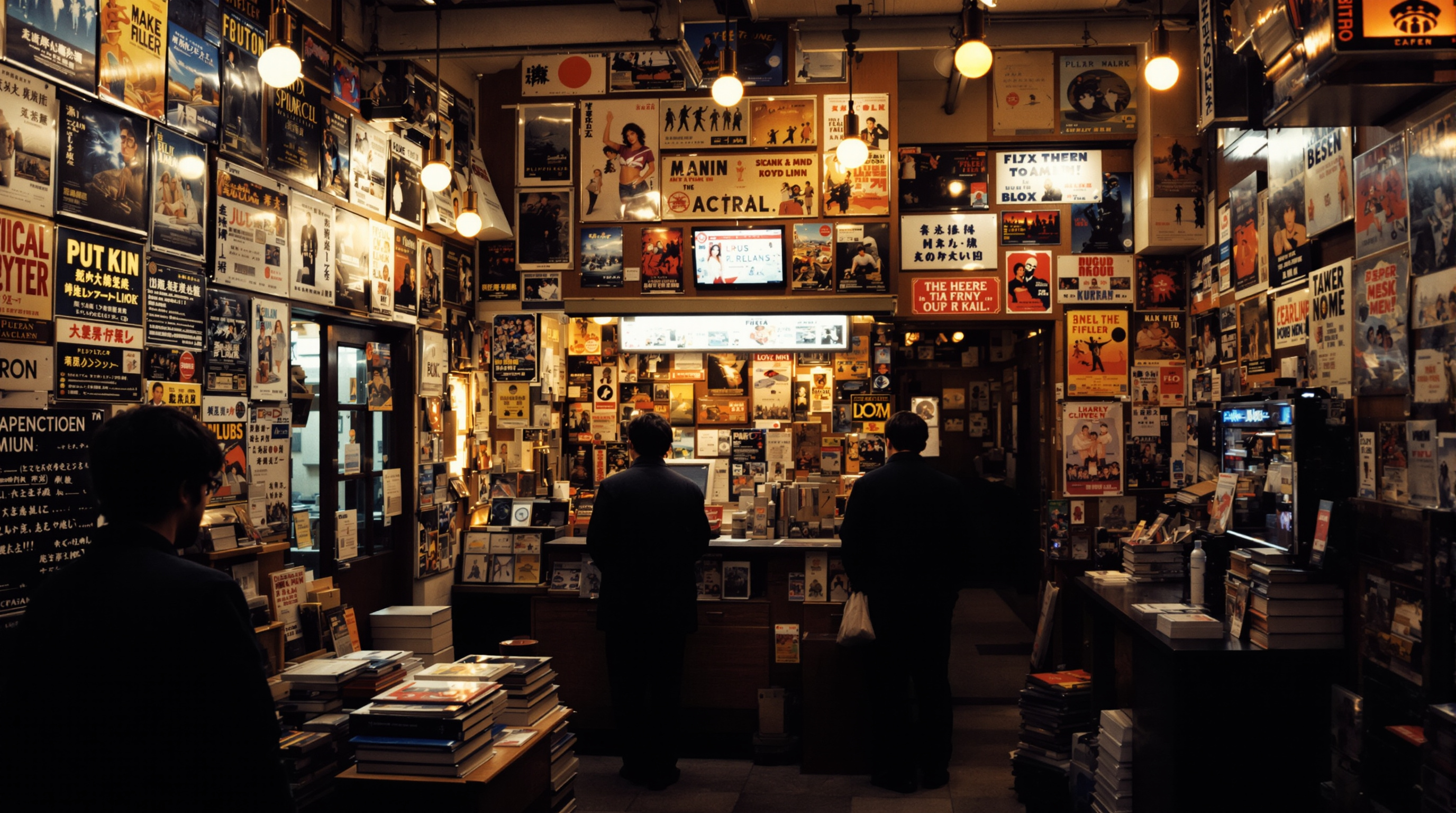
What Was a Mini-Theater?
The term mini-shiatā entered Japanese film vocabulary in the 1980s to describe a new kind of venue: a small, independently programmed cinema, typically seating between fifty and two hundred people, dedicated to films that the major theater chains would not touch. Unlike the block-booked houses tied to studio release calendars, a mini-theater chose its own slate — European art films, American independents, documentaries, restored classics, and the emerging cinemas of Iran, China, Taiwan, and Hong Kong. By the early 1990s, dozens of these rooms operated across Tokyo's Shibuya, Shinjuku, and Ginza districts, with sister venues in Osaka, Kyoto, Nagoya, and beyond.
Walking into one was a distinct sensory experience. The lobby was usually no larger than a living room, papered floor to ceiling with flyers for coming attractions. There was a counter selling pamphlets and postcards, a single ticket window, and a ninety-minute turnover of strangers who all, somehow, looked like they owned a lot of books. The seats were not luxurious. Nobody cared.
Programming as Authorship
What made the mini-theater special was not the room but the taste behind it. Programmers operated as curators, and regulars learned to trust a venue's sensibility the way readers trust an editor. One house might specialize in French cinema, another in radical documentaries, another in all-night genre retrospectives. A film that succeeded at a respected mini-theater acquired a cachet no advertising budget could purchase, and distributors learned to use these rooms as launchpads: open small, let the cinephile press and word of mouth build, then expand. Several of the decade's most surprising hits — including more than one film profiled in these essays — followed exactly that trajectory from a hundred-seat room to national release.
The mini-theater also functioned as a university. For the price of a ticket, a student in 1995 could absorb the complete works of a Polish master one week and a new Iranian wave the next. Filmmakers, critics, and programmers who shape Japanese cinema today routinely credit these rooms as their film school — an education assembled one double bill at a time.
The Ritual of Attendance
Mini-theater culture came with customs. You arrived early, because seats were unreserved and the queue was part of the social fabric. You collected the chirashi for everything, even films you would never see, because the flyers themselves were graphic-design objects worth keeping. If the film moved you, you bought the pamphlet on the way out and read it on the train home, extending the screening by another hour. And you returned, not necessarily for any particular film, but because the venue had become part of your weekly geography.
It is difficult to overstate how analog this all was, and how well it worked. Discovery happened through physical paper, trusted rooms, and conversation. A wall of flyers did the job now performed by recommendation algorithms — arguably with better taste and certainly with better typography.
Decline, Memory, and Stubborn Survival
The model weakened in the 2000s. Multiplexes absorbed the audience for mid-tier foreign films, DVD shortened the theatrical window, and rising urban rents punished small rooms with low turnover. Many beloved venues closed, each departure mourned in the film press like the death of a public figure. The COVID-19 era of the early 2020s brought further losses and, with them, an outpouring of crowdfunding campaigns that revealed how deeply these rooms were loved.
Eiren's national screen counts put this story in a wider frame. Japan had 1,734 screens in 1993, the decade's low, 1,828 in 1996, and 2,221 in 1999. In 2025 the total was 3,697, including 3,305 screens in cinema complexes. The latter figure counts screens, not separate buildings: a cinema with several auditoriums contributes several screens. It should not be read as a count of individual places to go to the movies.
These figures also describe the entire exhibition market, not mini-theaters alone. They cannot identify which small rooms survived or how adventurous a program was. More screens can mean more potential places for a film to play, but the total says nothing about how those screens divide their schedules. For the mini-theater story, capacity and programming remain separate questions; the national count supplies context, rather than a verdict on either.
Yet the mini-theater is not extinct. A determined constellation of independent screens still operates across Japan, programming with the same conviction, and institutions such as the National Film Archive of Japan and the Japan Foundation continue to champion the repertory culture the mini-theaters pioneered. For this history, though, the mini-theater matters most as the stage on which the 1990s foreign-film boom played out. The distribution machine described in our history essay delivered the prints; these small rooms turned them into memories.